
First Tracks — Morning Tour
Our easiest ride. A good first one if the cold is what worries you.
From 219 €
See the tour →Field Guide
How to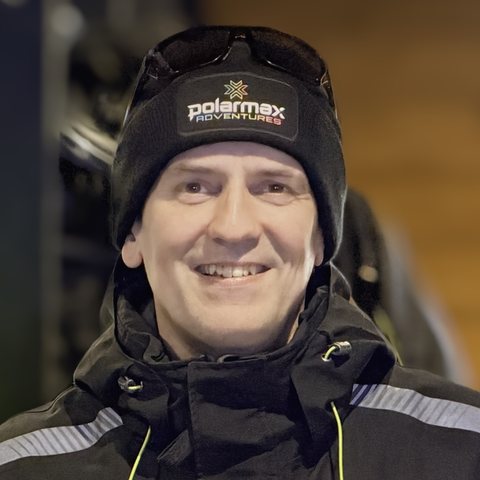
Short answer
Wear a thermal base layer, ideally merino, with a fleece jacket and fleece pants on top, and one or two pairs of thin socks. No cotton in any layer. We give you everything else at our base: a padded, windproof snowmobile overall, boots, wool socks, gloves, a balaclava, a full-face helmet and goggles. When it is around −10 to −20 °C we add a padded midlayer from our own stock. You do not need to buy anything.
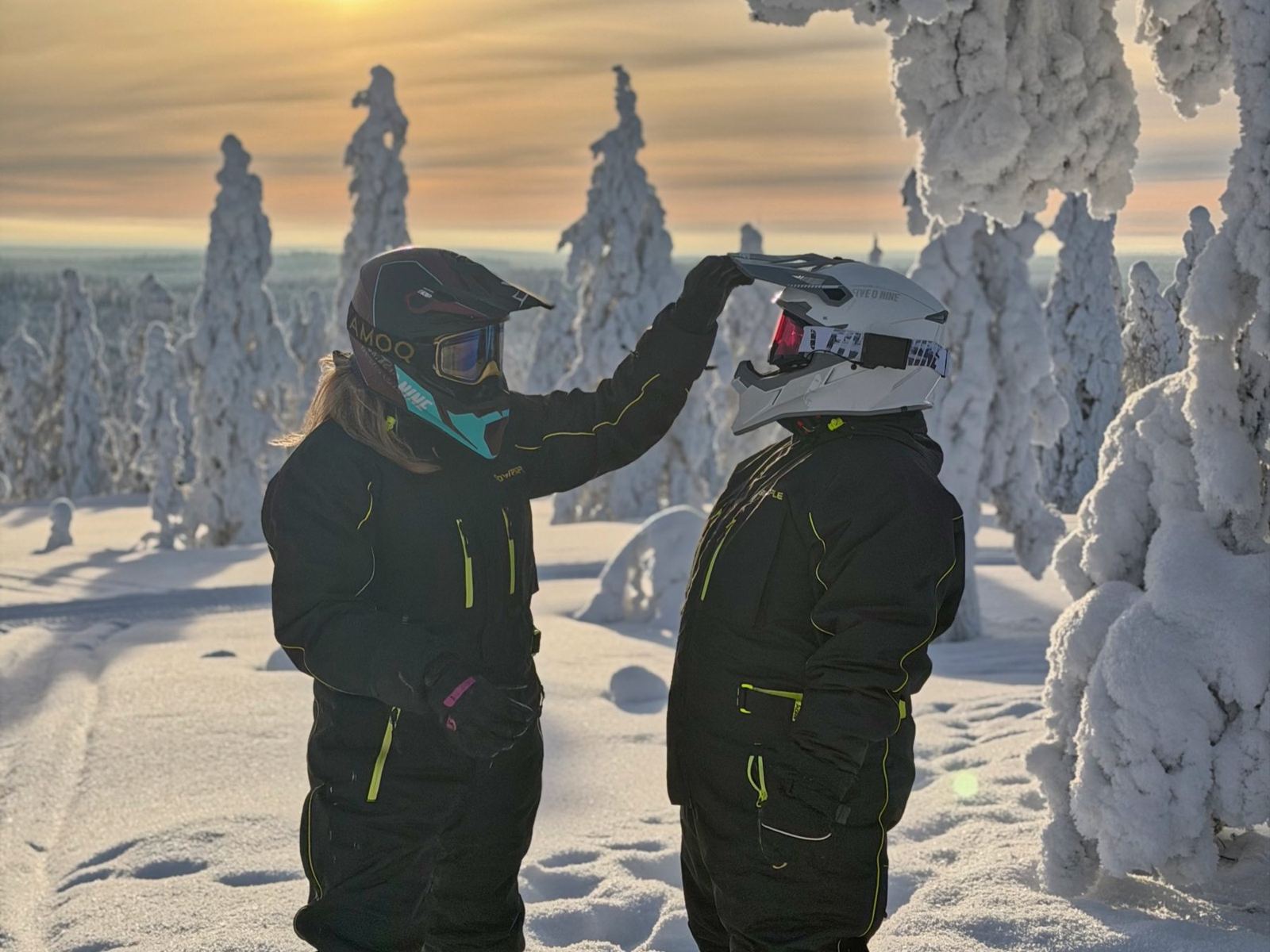
When guests arrive at our base, we start by telling them about the day: the temperature, how that cold will feel once we are riding, and what the trails are likely to be like. Then we dress everyone.
Feeling the cold is very personal, so there is no standard set. We look at each guest individually, and we make sure the clothes and gear suit that person.
You can arrive in whatever you like, but a thermal base layer helps. Merino is best, or a good synthetic winter base layer, with merino or hiking socks.
On top, your own fleece jacket and fleece pants are usually enough in a normal winter. If it is around −10 to −20 °C, we add a padded midlayer, which is a light padded or down jacket and pants. We have these in stock, so you do not need to buy anything.
| What you wear | You bring | We give you |
|---|---|---|
| Body, from the skin out | ||
| 1Thermal base layerTop and bottoms. Merino, or a good synthetic. | ||
| 2Warm midlayer, like a fleece jacket and fleece pantsUsually enough in a normal winter. | ||
| 3Padded midlayerLight padded or down jacket and pants, added around −10 to −20 °C. Your own is fine, and we have them too. | ||
| 4Snowmobile overallPadded, windproof and waterproof. It goes over everything. | ||
| Feet, hands and head | ||
| 5Warm socksMerino or warm technical hiking socks. | ||
| 6Wool socksOurs go over your own thin ones. | ||
| 7Snowmobile bootsOne or two sizes bigger than your normal shoes. | ||
| 8Gloves and mittensThermal gloves for drivers, mittens for passengers and children. | ||
| 9BalaclavaGoes under the helmet. | ||
| 10Full-face helmetA motocross helmet that covers the whole face. | ||
| 11GogglesHeated goggles if you wear glasses. | ||
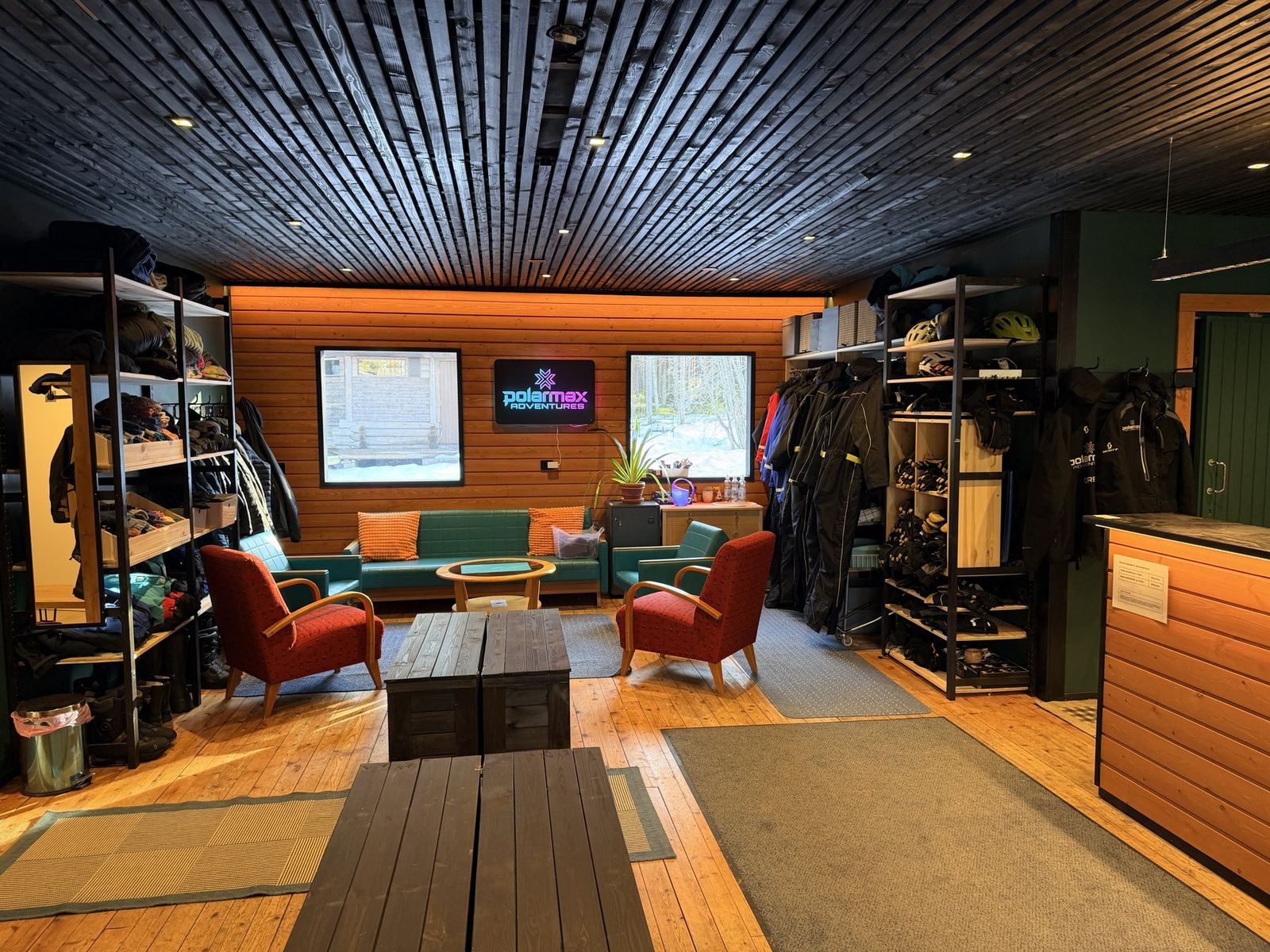
Our boots are made for snowmobiling. They are light and very warm. You wear our wool socks over your own thin socks, and one or two thin pairs of your own is plenty.
We usually recommend boots one or two sizes bigger than you normally wear. A boot that is slightly too big does no harm, because these boots are light and easy to walk in.
If it is very cold, we also give chemical warmers for the feet, free of charge. They help most for the passenger, who gets no heat from the engine. In milder weather we skip them, because warm feet sweat and wet socks make you colder.
Choose a roomy overall. In socks, the legs will look too long. When you sit down in your boots, the length is right. Air inside the overall keeps you warmer than a tight fit.
We have sizes from small children up to 5–6XL. After you are dressed, it gets hot indoors quickly, so we open the dressing room up and let it cool while we finish.
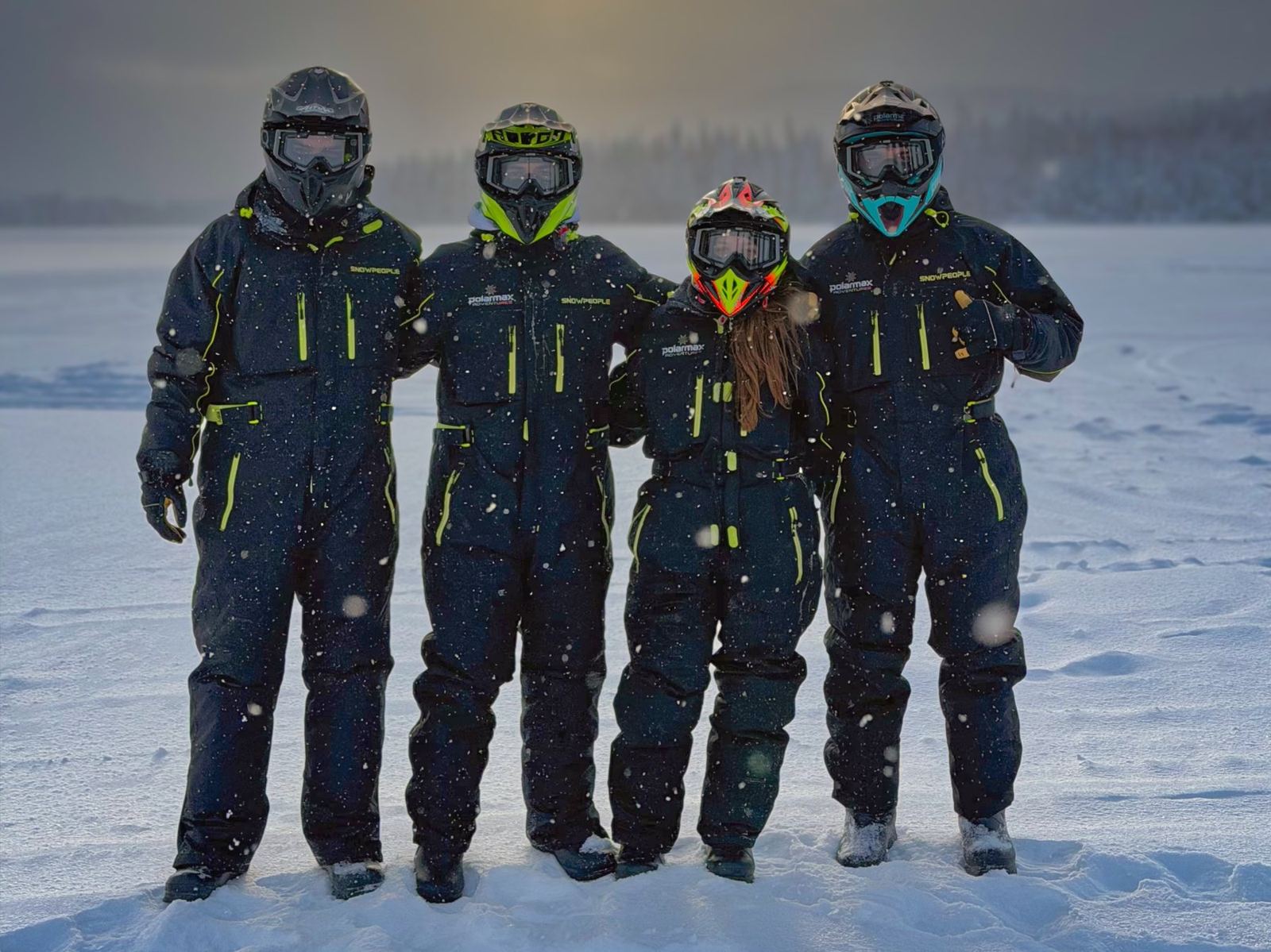
The snowmobile has a windshield and heating elements.
When it is cold, we add hand guards over the grips to block the wind.
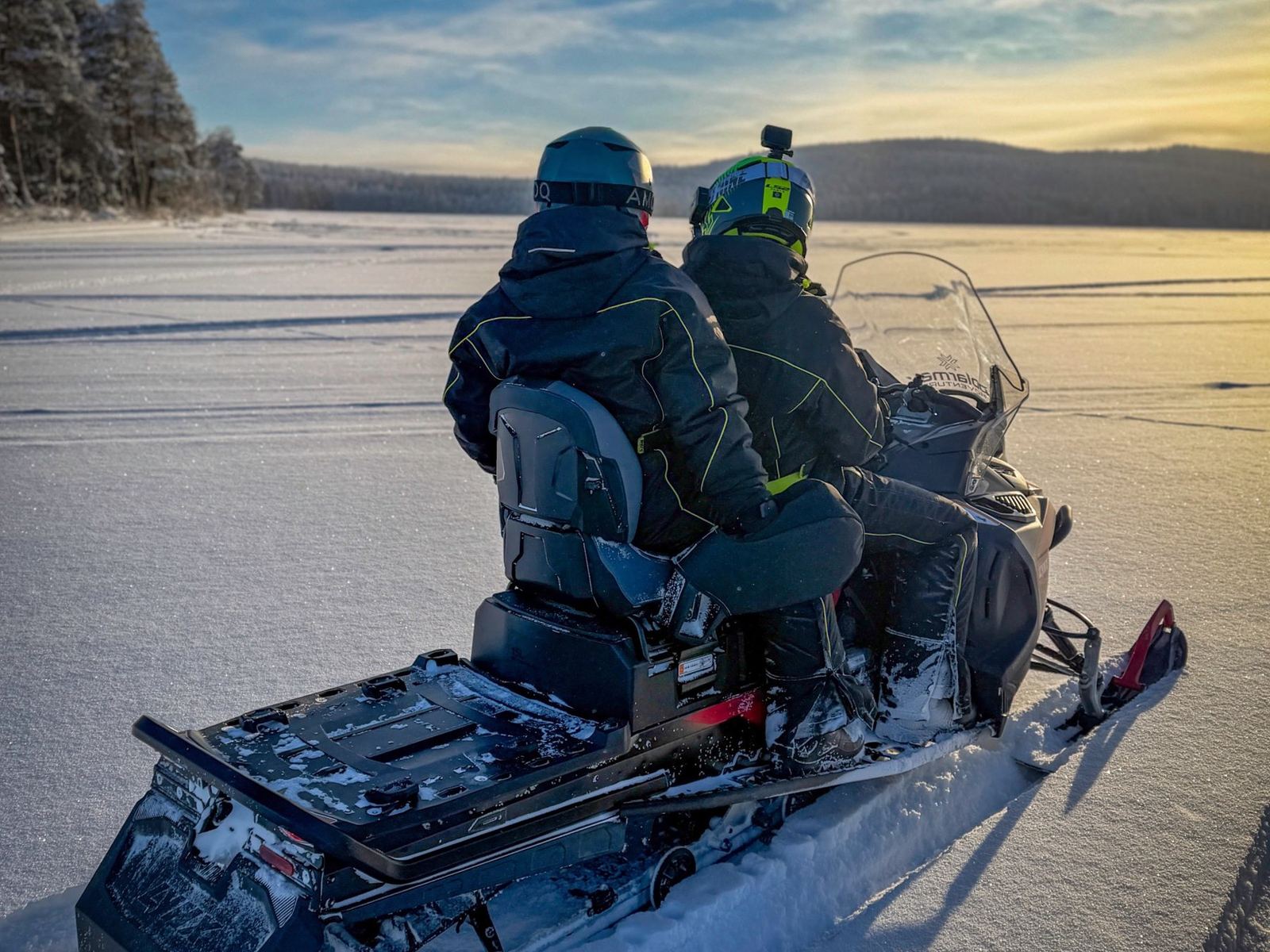
Many snowmobile helmets used by safari companies are open-face with a lift-up visor. We do not use them. They do not have proper face protection. In real winter cold that visor usually fogs up. Then it has to be kept up, and it does not protect from the wind. People often pull a scarf over the mouth, and the breath turns into a wet layer on the face. A wet face in hard frost is a bad combination.
We use a full-face helmet with chin protection and goggles made for snowmobiling. A balaclava facemask goes under the helmet. It does not cover your mouth, so breathing is easy.
The full-face helmet and goggles protect the face from wind, cold and impacts. In our experience it is the combination that works best, and this is the helmet setup most locals use.
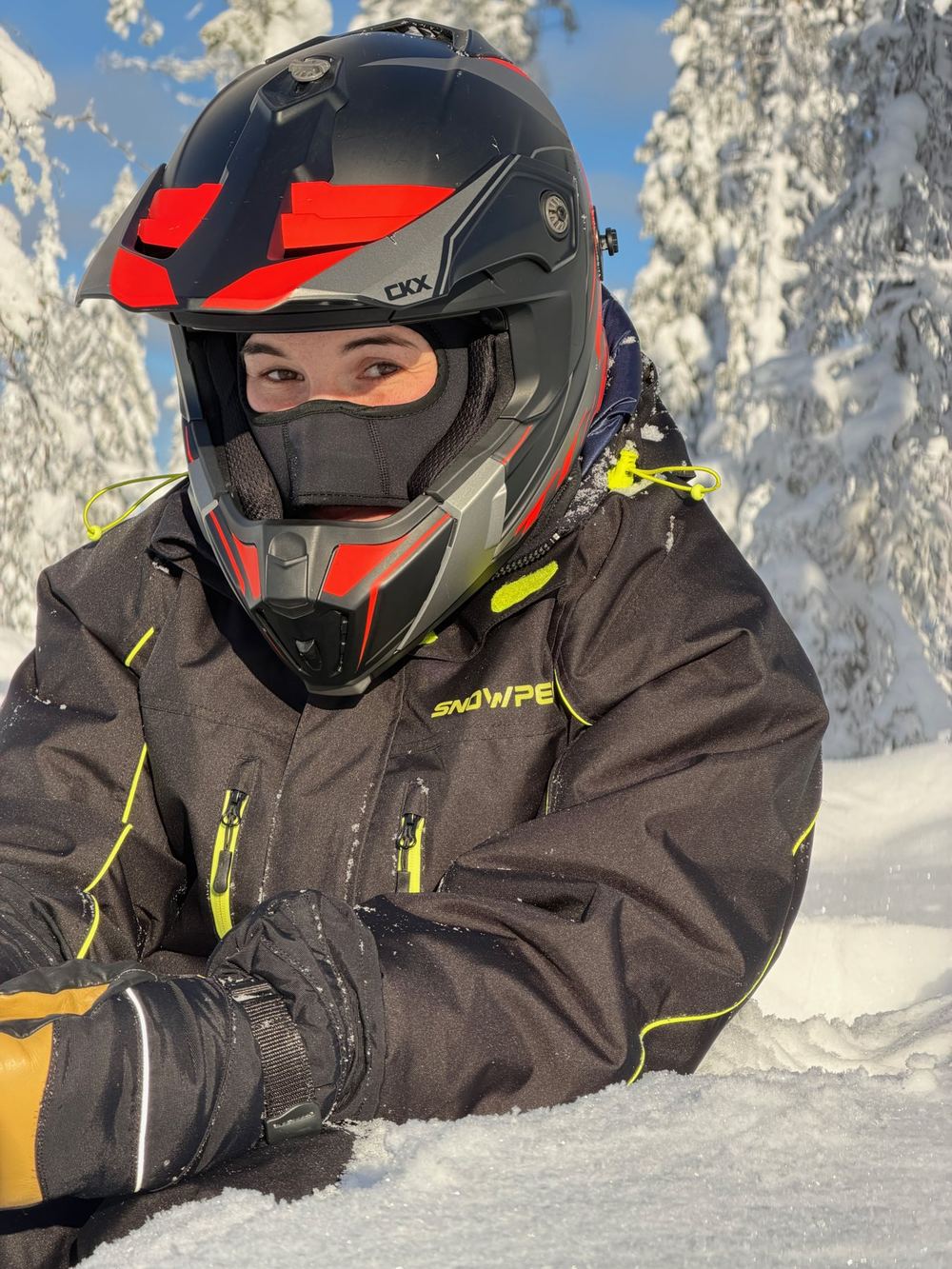
In winter conditions, normal glasses fog up very easily. We look at each guest with glasses individually and choose the setup that works for them. The best solutions:
Our goggles have double lenses designed for snowmobiling and rarely fog up. In very cold conditions it can still happen. If it does, we swap the goggles.
Each snowmobile also has a small storage space under the windshield, warmed by the engine. When your goggles fog, we can swap them for dry, warm ones, and the damp ones dry in the storage space until the next swap. That way even a long day goes without ice on the lenses.
On a long tour we go indoors for lunch, take boots off, open the gear up and let everything dry.
We have gear for children in every size: overalls, boots, mittens and helmets. They wear their own children’s helmets.
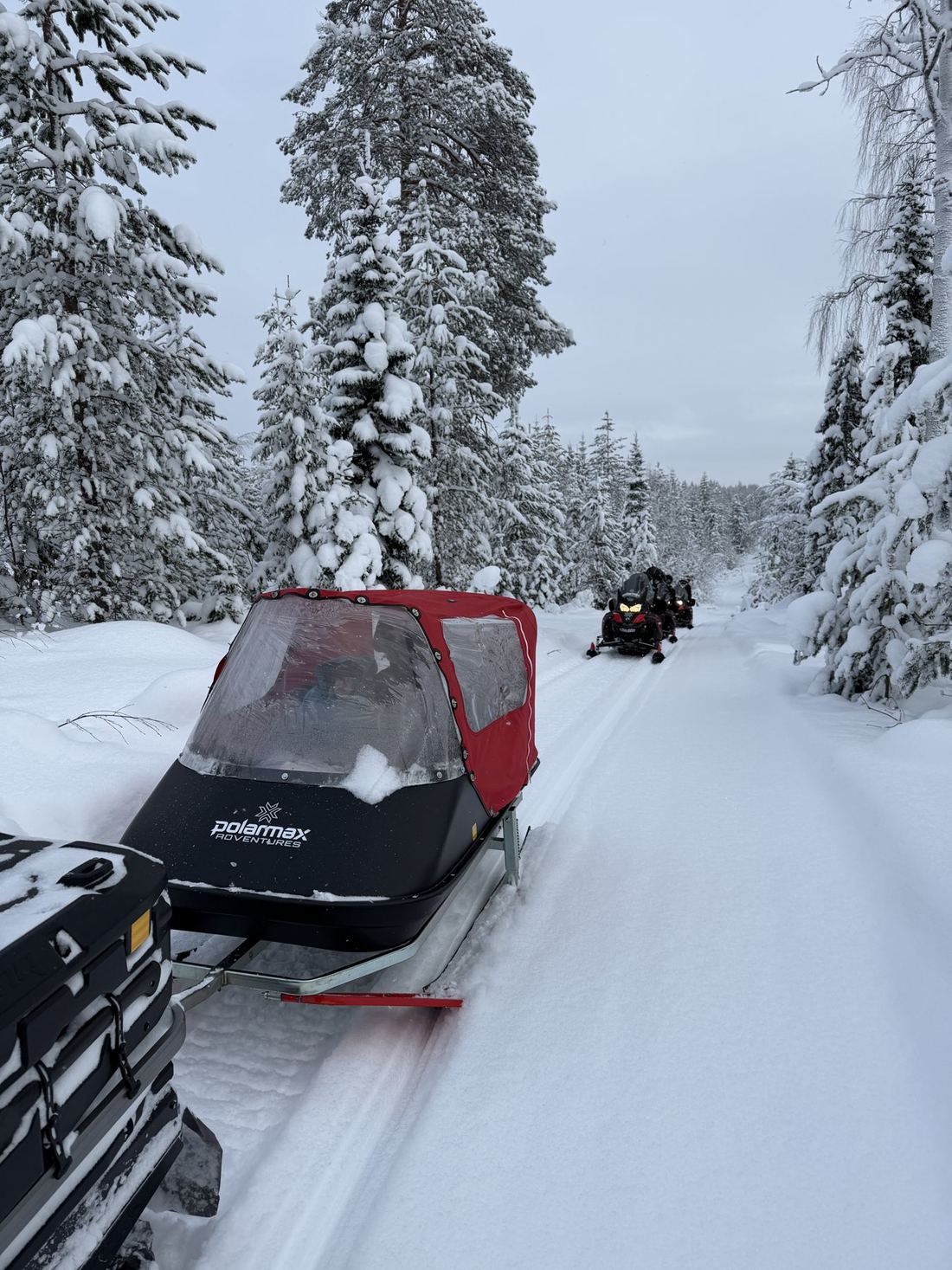
Small children cool down faster than adults and do not keep their body heat as well. They ride in a covered, suspended sledge pulled by the guide. It is surprisingly comfortable and moves softly. We put blankets over and under them, and smaller children are covered so their hands are under the blanket too.
When needed, the sledge is also heated, so children stay warm in harder frost too. We still make sure the clothing is enough on its own in every situation.
The parents usually ride right behind the guide, so the children can see them when we stop. The guide checks on the children regularly.
Our age limit is four years. We need one limit that works in all conditions, because we cannot know the weather and the child in advance. If it is −20 °C or colder, we usually cancel or reschedule bookings with children. Oftentimes it is cold in the morning and warms up during the day.
We always plan the route for the weather of the day. When needed, we stop along the way to warm up indoors.
Tell your guide. Our first aid kit always has chemical warmers for feet, hands and body, thermal blankets, and extra gloves and mittens in case something gets wet.
No guest should have to be cold on our tours.
Written by
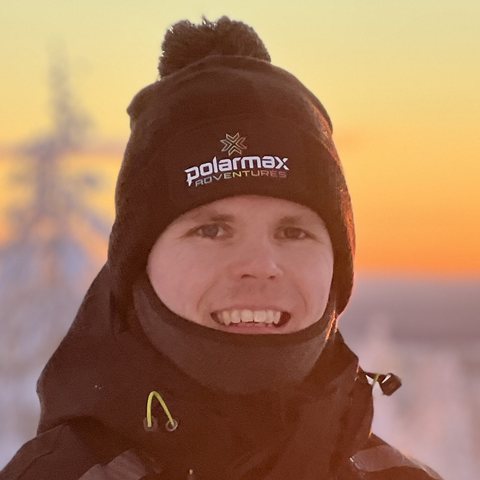
Marko & Tuomas
Guides, PolarMax
Marko founded PolarMax, leads our tours and teaches snowmobile riding. Tuomas has been our guide since day one. We have spent our lives roaming these trails, training drivers and guiding people through Arctic nature.
About us →Tours
3 h · starts 10:00
Our easiest ride. A good first one if the cold is what worries you.
From 219 €
See the tour →7 h · starts 09:00 · a ride for adults
A long day out, with lunch indoors where boots come off and the gear dries.
From 349 €
See the tour →We'll make sure you're properly dressed before we go.
See snowmobile tours